Saturday, 8 October 2011

Baba Balak Nath


Baba Balak Nath Sidhpeeth  is one of the most famous pilgrim- center of North Indian Hill State  Himachal Pradesh i.e. the God’s own land. The Ancient Cave and temple architecture graces the DeotSidh  in Hamirpur District. Lakhs of devotees from India and abroad visit this temple to reinforce their firm faith in the "Siddha Tradition". We attempt to put a few of these on our Website, along with the system of worship and spiritualism
1.      ‘Vishwa Deva’,
2.      ‘Sandhya Gana’,
3.      ‘Ashwani Kumar’,
4.      ‘Charna’,
5.      ‘Brahmavadi’,
6.      ‘Muni Gana’,
7.      ‘Vidya Dhara’,
8.      ‘Upsara’,
9.      ‘Kinnara’,
10.  ‘Pakshi’ and
11.  ‘Naga’.
5th Cantos of the ‘Valmiki Ramayana’ i.e. ‘Sundra Kanda’ relates to a conversation among ‘Siddhas’, ‘Charnas’and Maharishis.

Dances of ‘Siddhas’ , ‘Yaksha’ and ‘Gandharva’ in the ‘Vadrika Ashrama’ of Maharishi Prashra.

‘Patanjali’s Yog Sutra’ (Vibhuti Pada) says much about the "vision of ‘Siddhas’ by pious souls".

AmarKosha’ has many references of ‘Siddhas’ along ‘Vidyadhara’, ‘Upsara’, ‘Yaksha’, ‘Rakshasha’, ‘Pishacha’, ‘Guhiaka’ and ‘Bhuta’.

The originator of the ‘Sankhya Philosophy’ is believed to be a prominent Siddha. In ‘Srimad Bhagvad Gita’ Lord Krishna comments Himself as ‘Kapil Muni’ among ‘Siddhas’.

In ‘Ashvamedha Parva’ of ‘Mahabharata’ there is a reference of the discussion about the ‘Siddhas’. In Hindu belief, the ‘Siddhas’are known to live eternally and in invisible form. Legend has it that –‘Baba Balak Nath’ is a contemporary of 83 ‘Siddhas’of His times. ‘Siddha Tradition’ is based on ‘GURU SHISHYA PRAMPARA’ in Hindu Philosophy and ‘Baba Balak Nath’ is believed the disciple of ‘Rishi Dattariya’ whose lineage is traced to ‘Rishi Attri’.

The Sidhpeeth in the Historical context: "Nav Nathas" and "Chaurasi Siddhas" lived in the period 8th to 12th century A.D. In the 10th century A.D. during their routine wandering in the hills, they visited Bharmour in Chamba District of Himachal Pradesh during the reign of Shahil Varman. One of those—Charpat Nath – became "The Rajguru" of Kingdom. The 8th and 9th century A.D.Hindi Literature is enriched with the preaching of Sidhas likes Sarhapa, Sharhapa, Luipaetc. Baba’s contemporary Guru Gorakh Nath was also a prominent ascetic of those times.
 
In numberable Jana Srutis sing praises to the divinity of Baba Balak Nath

His birth references among "Chaurasi Sidhas": We narrate the Lord Shiva’s AmarKatha as the Jana Srutis in this context. Amar Katha is a Puranic story about the origin of Baba Ji. As told, a parrot nestling incidentally heard the Amar Katha being told by "Lord Shiva" to "Parvati". Lord Shiva’s ‘Trishul’ followed parrot nestling. Parrot nestling hid in the stomach of the wife of Rishi Vyasa and requested a promise from Lord Shiva for coming out. The promise was that when parrot nestling would come out in human form, it along with all the children born at that time might become eternal. Lord Shiva agreed for that and an extra-ordinary beautiful lad came out and vowed before Lord Shiva for blessing. This lad famed as ‘Sukdev Muni’, later on. Baba Balak Nath was one of the nine ‘Nathas’ and eighty four ‘Sidhas’ born at that time
Emanationof Lord Shankra in ‘Dvapara Yuga’

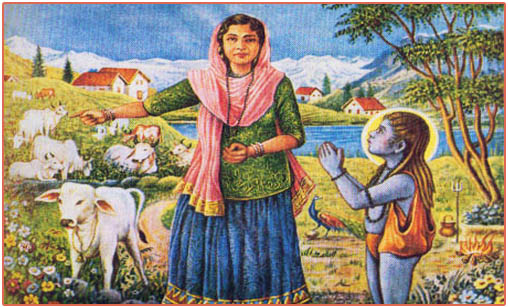
According to ‘Lok Srutis’ Baba Ji reincarnates Yuga and Yuga. He was known as ‘Skanda’in ‘Sat Yuga’, ‘Kaul’ in ‘TretaYuga’ and ‘Mahakaul’ and ‘Dvapra Yuga’. ‘Mahakaul’ of ‘Dvapra Yuga’, while going to ‘Kailasha Parvata’, met an old woman on the way. The old lady asked the mission and destination of Baba Ji. After knowing all that the old woman advised ‘Mahakaul’ to meditate on the bank of ‘Mansarovar’ and request ‘Mother Parvati’ (who would come there for bathing on special occasions), help him in reaching ‘Lord Shiva’.‘Mahakaul’ acted as told and became successful in his mission of reaching ‘Lord Shiva’ On seeing ‘Balayogi Mahakaul’, ‘Lord Shiva’ became very happy and blessed Baba Ji to be the ‘Sidha symbol’ of worshipping for devotee sin ‘Kaliyuga’ and his child like image to remain for ever.

Birthand Sanskritisation of Baba ji in Kalyuga

Baba Ji is said to have taken birth in Gujarat, Kathiabad. The name of His mother was Laxmi and that of his father Vishno Vaish. Here Baba Ji named as ‘Dev’ became lost in ‘Bhagvad devotion’. Seeing this, his parents wanted to marry him; but Baba Ji didn’t agree and left His home in search of ‘Parma Sidhi’ and came by ‘Swami Dattaitreya’ in Junagarh on Girnar hill - a historical place. It is here Baba ji learnt the basics of ‘Sidhas’ from Swami Dattaitreya and became ‘Sidha’ and came to be known as ‘Baba Balak Nath Ji’ There is mention of interaction of Swami Viveka Nanda with a ‘Pawan Hari Sidh Baba’ in Vivekananda literature published from ‘Advait Ashram, Calcutta’. As told that ‘Pawna Hari Baba’ learnt the science of ‘Sidhas’at Girnar hills. This has similarity with ‘Baba Balak Nath Ji’

Ron Geaves and Catherine Barnes

The regional cult of Baba Balak Nath arrived in Britain from the Jalandhar Doaba in the Punjab with migration from that region. Traditionally the followers of the deity have been drawn from both Hindu and Sikh communities in the Punjab and they demonstrate the informal and eclectic religious life associated with the region. The increasing attempts to place Baba Balak Nath at the heart of Sanatana Dharma provide a case study to illustrate the processes where by a rural 'folk' tradition seeks access to a perceived orthodoxy represented by several traditions within contemporary Hinduism. The dominant tradition associated with Baba Balaknath is that he is an incarnation of the son of Shiva usually known as Skanda or Kartak. Visual depictions of Baba Balaknath are very similar to South Indian visualizations of Murukan.

The article explores the regional folk cult of Baba Balaknath as it moves from its major center of worship in the Himalayan foothills of Himachal Pradesh down to the plains of the Punjab and then to on to several cities of the West Midlands in Britain. At each location the cult picks up practices and beliefs which are dominant in the religion of the new locality but retains the dominant motif of Skanda worship.

On its arrival in Britain, the priests of the cult have adopted a variety of strategies that legitimize the folk tradition and aid it in adapting to the new environment. These strategies fall into the category of universalisation or sanskritisation. Study of the transmigration of the worship of Baba Balaknath from the Punjab to Britain provides a unique insight into the transformation of a regional Hindu folk cult as it attempts to legitimize itself through moving closer to the 'Great Tradition' in Hinduism or adopting an eclectic universalism.

Monday, 3 October 2011

Vijayadashmi


Origin
There are many stories related to this festival:
1) As we saw in Navratri, the Lord's Shakti, Parvati, vanquished the demon Mahishasur on the 10th day after a 9-day battle. This is cited in the Skanda Puran. The sentiment here is that the uncontrolled indriyas are only conquered by the Lord's Shakti.
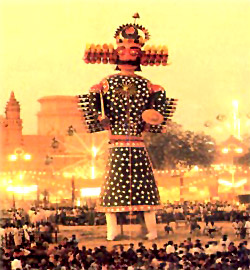
2) On this day Lord Ram vanquished Ravan. Therefore people celebrate the Lord's victory by burning Ravan's effigy on this day.
3) Dhaumya rishi's son, Mahaar married Shami, daughter of Aarva rishi, of Malwa. After marriage both were on their way to have darshan and blessings of Shaunak rishi. On the way they met Bhrachundi rishi who had a trunk on his head. Seeing this the two made fun of him. The rishi cursed them and both turned into trees. For succor both prayed to Ganeshji. He blessed them that they would be offered worship. From this day people offer pujan to the Mahaar tree and Shami tree (commonly known as 'Khijdo', Latin-Prosopis spicigera ). This pujan is considered to be as fruitful as Shiv's pujan.
4)
The Skand Puran (2/8/5) also cites another story. Kautsa, the poor pupil of Vishwamitra rishi, approached Raghu Raja for wealth, to gift his guru. However Raghu Raja had already spent all his wealth to prepare a Vishwajit yagna. However so that Kautsa would not have to leave empty-handed, he raided Kuber - the treasurer of the devas, on this day. The defeated Kuber sprinkled 14 crore (14x107) gold coins on the Shami tree. Kautsa gathered and gifted them to his guru. In turn, Vishwamitra gifted these to the poor. Henceforth, the leaves of the Shami are symbolically equivalent to gold for purposes of pujan. Since the Shami tree gifted wealth, people perform its pujan on this day.
5) On this day, Arjun picked up his weapons hidden on the Shami tree, to battle with Duryodhan in order to retrieve Virat Raja's cows from him.
Ritual
  • People offer pujan to weapons and vehicles. They also perform 'Sharda pujan' - of books. The latter is symbolic of conquest over one's self.
  • People embark on all forms of auspicious ventures on this day, without the need to consider the auspicious time in the 'panchaang.'
  • Students offer pujan to Saraswati, the goddess of learning.
Traditionally, 'jalebi' (sweet made from plain flour and ghee) and 'fafda' (made from gram flour) with 'chutney' are offered to the Lord and devotees avail of this prasad. These food items balance the 'pitta' humour, of the 3 humours in the body. For, during and after Bhadarva, 'pitta' usually increases, which leads to various illnesses. Therefore the above foods of sugar and ghee balance 'pitta'.


Import

The root sentiment of Vijaya Dashmi is victory; of good over evil and of self over one's mundane indriyas. Man forever wishes to be victorious over others and over creation. Moreover, the triumph of victory leads him to luxury and extravagance. These then ruin him. Therefore the scriptures advise us to attain victory over the mind. One who has not conquered the mind has not conquered anything. Even the stalwarts were subdued by their whims. Vishwamitra succumbed to Menka, Yudhisthir to gambling. Therefore the Gita (2/60) proclaims that even intellectuals who strive to control their minds are defeated by their indriyas and swayed towards sensual pleasures. Chanakya also revealed to emperor Chandragupta Maurya: 'The gist of the scriptures is to attain victory over the indriyas.'

In the 'Maniratnamala', Shankaracharya has stipulated:
Jitam jagat kena, mano hi yena.

i.e. One who has conquered his mind has conquered the world. For this, one needs to imbibe Dharma. Throughout the Mahabharat, sage Ved Vyas reiterates that:
'Yato Dharmastato jayaha'


i.e. Where there is Dharma, there is victory.
And where there is God there is Dharma. A common idiom associated with Dashera is that, 'One's horse should be able to run on this day' (if not during other times of the year). To ensure that our 'horse' (our life) does not collapse on Dashera, the scriptures advocate taking refuge in the God-realised Satpurush and to sincerely obey his commands.
The true Vijaya Dashmi is in consolidating this sentiment in our lives.
. In turn, Vishwamitra gifted these to the poor. Henceforth, the leaves of the Shami are symbolically equivalent to gold for purposes of pujan. Since the Shami tree gifted wealth, people perform its pujan on this day.
5) On this day, Arjun picked up his weapons hidden on the Shami tree, to battle with Duryodhan in order to retrieve Virat Raja's cows from him.
Ritual
  • People offer pujan to weapons and vehicles. They also perform 'Sharda pujan' - of books. The latter is symbolic of conquest over one's self.
  • People embark on all forms of auspicious ventures on this day, without the need to consider the auspicious time in the 'panchaang.'
  • Students offer pujan to Saraswati, the goddess of learning.
Traditionally, 'jalebi' (sweet made from plain flour and ghee) and 'fafda' (made from gram flour) with 'chutney' are offered to the Lord and devotees avail of this prasad. These food items balance the 'pitta' humour, of the 3 humours in the body. For, during and after Bhadarva, 'pitta' usually increases, which leads to various illnesses. Therefore the above foods of sugar and ghee balance 'pitta'.


Import

The root sentiment of Vijaya Dashmi is victory; of good over evil and of self over one's mundane indriyas. Man forever wishes to be victorious over others and over creation. Moreover, the triumph of victory leads him to luxury and extravagance. These then ruin him. Therefore the scriptures advise us to attain victory over the mind. One who has not conquered the mind has not conquered anything. Even the stalwarts were subdued by their whims. Vishwamitra succumbed to Menka, Yudhisthir to gambling. Therefore the Gita (2/60) proclaims that even intellectuals who strive to control their minds are defeated by their indriyas and swayed towards sensual pleasures. Chanakya also revealed to emperor Chandragupta Maurya: 'The gist of the scriptures is to attain victory over the indriyas.'

In the 'Maniratnamala', Shankaracharya has stipulated:
Jitam jagat kena, mano hi yena.

i.e. One who has conquered his mind has conquered the world. For this, one needs to imbibe Dharma. Throughout the Mahabharat, sage Ved Vyas reiterates that:
'Yato Dharmastato jayaha'


i.e. Where there is Dharma, there is victory.
And where there is God there is Dharma. A common idiom associated with Dashera is that, 'One's horse should be able to run on this day' (if not during other times of the year). To ensure that our 'horse' (our life) does not collapse on Dashera, the scriptures advocate taking refuge in the God-realised Satpurush and to sincerely obey his commands.
The true Vijaya Dashmi is in consolidating this sentiment in our lives.

Friday, 30 September 2011

Diwali Poems


 Enjoy this wonderful collection of heart touching and vibrant Diwali Poems. You may quote them in Diwali Greeting Cards you prepared for loved ones and cherish the joys of glittering Festival of Lights.

If you too, have composed a Poem on Diwali, post it on our site and share your feelings with the world. We promise to publish your poem along with your name on this Diwali Poems page.

Aayaa Tyohaar Diwali Ka
Aayaa tyohaar Diwali ka
Bachcho ki khushhali ka
Bablu kahate papa se
Mujhako PC lana hai
guriya kahati mammi se
hame sitar bajana hai
papa bare achambhe me hai
ye mausam kangali ka
Aayaa tyohaar diwali ka

Bibi kahati pati dev se
Jab bonus tum paayoge
Sabse pahale haar sunahara
La mujhako pahnaao ge
Pati dev to mook bane hai
Rupaya denaa udhaari ka
Aayaa tyohaar diwali ka

Sab ki farmaish se tang huye hai
Bablu guriya ke papa ji
Patni to sir chadh kar bole
Kabhi na kahati aao ji
Ab bhaag na sakate papa ji
Jo theka liye rakhwali ka
Aayaa tyohaar diwali ka
Shambhu Nath


Tu Jagmagaaye Teraa Deep Jagamagaaye
Tu jagmagaaye teraa deep jagamagaaye
Saare jahaan ki khushiya tere bhee ghar ko aaye
Ganga aur Yamuna sa nirmal ho tera man
Ambar our dhara sa swachh ho tera tan
Is nagar me teri jyoti chamchamaaaye
Tu jagmagaaye teraa deep jagamagaaye

Achchhe karmo se jag me naam hogaa tera
Teri aahat se buraiya lengi nahi basera
Tere marane ke baad bhee log tera naam gaaye
Tu jagmagaaye teraa deep jagamagaaye

Mit jaaye andhera jo teri dagar me aaye
Aaye kabhi na gam jo deti chintaaye
Naam amar ho tera ek taaraa timtimaaye
Tu jagmagaaye teraa deep jagamagaaye

Door karna chhuachoot mandir masjid ka jhagara
Koi mare na bhookha koi rahe na kangala
Aane waalaa kal tera naam gungunaaye
Tu jagmagaaye teraa deep jagamagaaye
Shambhu Nath


Deep Jalao, Khushi Manao
Aayi Diwali Aayi!

Raat Amaavas ki to kya,
Ghar-ghar hua ujaala
Saje kangure deepshikha se,
Jyon pehne ho mala
Man mutav mat rakhna bhai,
Aayi Diwali Aayi!

Jhilmiljhilmil bijli ki
Rang birangi ladiyan
Nanhe munne hathon main veh
Dil fareb phuljhariyan
Diwali hai parv milan ka,
Bharat milihin nij bhai
Chaurahe, mandir, galiyon main
Lage hue hain mele
Nazar pade jis or dikhe,
Bhare khushi se chehre
Chaudah baras baad laute hain,
Siyalakhan Raghurai
Diwali ke din hain jaise,
Ghar main ho koi shaadi
Andar bahar hoye safedi,
Khush amma, khush daadi
Govardhan ko dhare chhanguriya
Inhi dinan gosayin
Nirmal Bharti


Season of Lights
Dunes of vapors from crackers rise,
Engulf, as odorous airs resound
Effusing joys to all abound
Pearls of gleams in these autumn nights
Adorn our lives else trite
With sparklers that motley skies
As soaring spirits of powder wander
Let us thank the heavenly might,
In this festive season of lights.


A Poem for Diwali
As echelons of zillion lights adorn,
and echoes of triumph and thunder swarm,
watching even a tiny gleam perform,
devoring ill,
sparkling joy despite forlorn,
exhorts a hearty & happy year merely born


Sonnet: Diwali
Today’s the `Festival of Lights’ all o’er;
A joyful day for minds and hearts and souls;
And people throng the Temples to offer,
Prayers, resolving to take better roles.

And most of them are richly clad and clean,
And eat such dainty foods and sweets with mirth;
Whilst noisy crackers burst, their lights are seen,
It seems to be a happy day on Earth!

But are there not hearts woe-filled, very sad?
Denied of laughter, smiles for days;
Today’s the triumph of Good over bad;
But what about the wastage in much ways?
True joy is when you see someone else smile!
True charity gives joy in Heav’nly style.
Dr John Celes


Diwali
The sweet smell of flowers
The array of colors
Diwali is here
Firecrackers are heard
Candles are lit
Children play
Presents are given
We pray to the gods
Diwali is here.
Suprina Balasubrumanian, age 11


Happiness of 'Diwali'
Joy, Joy, Joy,
We can play with our cousins
We can eat so many sweets
We can fire crackers
We can worship Goddess Lakshmi because
It is Diwali
Happy Diwali
K. Anusha (VIII B)
Bhawan’s International Residential Public School


Deepavali Delights
Deepavali is here, Deepavali is here
That grand festival of Lights
That ends evil after a protracted fight
When good with all its might
Leads us from darkness to Light.

Deepavali is here, Deepavali is here
That great festival of sound
When crackers and laughter abound
When crackers and sparklers light up the sky
When delighted children jump with joy.

Deepavali is here, Deepavali is here
That gorgeous festival of snacks and sweets
Where everyone enjoys a royal feast
When old and young with delight meet
With love and affection all hearts beat.

Diwali is here, Diwali is here
That gracious festival which celebrates victory
The ancient festival of myth and mystery
That is mentioned in both mythology and history
The festival that signals Triumph over Tragedy.


Ayi Re Ayi Diwali
Ayi Re Ayi Diwali
Patakhe tohfe layi Diwali
Dil ko khush karne ayi Diwali
Ayi re ayi diwali
Ayi re ayi diwali
Maze karte huye bacche dekho
Mummy ka na Papa ka dar hai
School ka na Teacher ka dar hai
Bulb fool lagate Papa
Mandir sajati dekho Mummy
Bacche hain khelte koodte
Pathako main ekdum must hai
Khaana dekho banati chachi
Chocolate khate dekho chacha
Bhagwanji ki puja main sab
Shish jhukn ke baithe dekho
Arti lekar or parshaad khaakar
Jhoom utha saara parivaar
Ayi re ayi diwali
Ayi re ayi diwali
Khushiya dekho lai diwal
Ayi Re Ayi Diwali


Diwali Recipes


Here is a delectable collection of traditional Diwali Recipes to help you make this Diwali celebrations more zestful!! The collection includes Recipes for Diwali deserts and snacks. Choose and cook your favorite Diwali Recipe with love and delight your dear ones in a very special way!!

Malpua
Ingredients:
1/2 kg maida.
750 gm sugar.
1/2 ltr.milk.
1 cup grated coconut.
6 bananas.
25gm dry fruits.
5-6 ilaichi.
1 ltr. Refined oil.

Process
1 Boil the milk and stir it till it becomes thick. Then cool it.
2 In the milk add maida, sugar, dryfruits , coconut and ilaichi powder .Stir it till it becomes a paste.
3 Make banana paste and add it into the maida paste.
4 Hot oil in a pan. Make round shaped balls of the paste.
5 F ry these till they turn red.

Wheat Laddu
Ingredients:
1 cup Wheat Flour
1/4 cup Gram Flour
11/2 cup Sugar Powder
1/4 cup Grated Coconut
1/4 cup Dry Fruit almonds, raisins, kaju etc
1 cup Ghee

Preparation:
1. Heat the ghee.
2. Put both the flours in the heated ghee.
3. When nearly roasted put coconut and sliced dry fruit in the mixture.
4. Now put the ground sugar in the mixture and stir thoroughly.
5. Take off from the heat quickly and make laddus. You may also put the mixture in an oil based thali & make small pieces.